Hong Kong Convention and Exhibition Centre





トップカテゴリー


Cryo Facials: What Cold Therapy Can and Cannot Do for Skin
Cryo facials use controlled cooling to influence superficial blood flow, swelling and skin sensitivity. This can leave the face looking calmer, less puffy and temporarily firmer. The evidence for permanent skin tightening is much weaker, making precise temperature control, treatment design and realistic claims essential.
Cryo facials have become increasingly common in beauty clinics, medspas and home-use skincare. The appeal is understandable. A short period of controlled cooling can make the face feel refreshed, reduce puffiness and temporarily calm visible redness. The skin may also appear slightly tighter and more defined immediately after treatment.
The science behind those effects is real, but the way cryotherapy is marketed is not always accurate. Cooling can create meaningful short-term changes in the skin, yet that is very different from permanently tightening tissue, rebuilding collagen or producing a lifting effect comparable to technologies designed specifically for structural skin remodeling.
For brands developing cryo and hot-and-cold beauty devices, understanding that distinction is important. Strong product development starts with the actual biological response, not with the most dramatic marketing claim.
What is a cryo facial?
A cryo facial is a non-invasive treatment that lowers the temperature of superficial facial tissue for a controlled period of time. Depending on the product, cooling may be delivered through cold air, a temperature-controlled applicator, a cooling plate or a handheld contact system.
The purpose is not to freeze or damage tissue. Instead, the treatment creates a temporary thermal response in the skin while keeping the tissue intact.
This is fundamentally different from medical cryosurgery, where extremely low temperatures may deliberately destroy unwanted tissue. A cosmetic cryo device is designed around controlled exposure, comfort and repeatability.
That distinction also matters from a product-positioning perspective. As explained in Wellness vs Medical Claims in Light Therapy Devices, the intended use and the claims made around a device can strongly influence its development and regulatory pathway.
What happens when facial skin is cooled?
The first response occurs in the superficial blood vessels. As skin temperature falls, these vessels constrict, temporarily reducing blood flow close to the surface. Cooling can also reduce local swelling and influence sensory nerve activity, which is why the skin may feel calmer, less sensitive and slightly tighter after treatment.
These effects explain much of what users see immediately after a cryo facial. Reduced puffiness can make the jawline look more defined, while less swelling around the cheeks or under-eye area can create a fresher appearance. The treatment may also reduce the sensation of heat or irritation after certain cosmetic procedures.
The key point is that these are primarily short-term physiological changes. They can create a visible result without necessarily changing the underlying structure of the skin.
Why does the skin look tighter?
This is where cryo facial marketing often becomes misleading.
When blood vessels constrict and superficial swelling decreases, the face can look firmer and more defined. The skin may also feel tighter as tissue temperature changes. That effect can be noticeable, but it should not automatically be described as long-term skin tightening.
Meaningful structural tightening usually requires changes deeper in the dermis, such as collagen contraction, new collagen formation or remodeling of the extracellular matrix. Current evidence does not convincingly show that a conventional surface-level cryo facial produces these changes to a significant degree.
A more accurate claim is therefore that controlled cooling can create a temporarily firmer appearance.
This distinction is important for brands because claims should reflect what the finished device has actually been shown to do. We explore this further in Clinical Evidence and Claims: What Light Therapy Brands Need to Know.
De-puffing and redness reduction are more credible applications
Where cryo facials become particularly interesting is in temporary de-puffing and calming.
Facial swelling can be influenced by sleep, travel, inflammation, fluid distribution and cosmetic procedures. Cooling can temporarily reduce this swelling, which may make the contours of the face look sharper. The under-eye area may appear less puffy and the cheeks or jawline slightly more defined.
Cooling can also temporarily reduce erythema, the visible redness caused by increased superficial blood flow. Research into controlled facial cooling after aesthetic treatments has shown reductions in discomfort and swelling, with some users also reporting improvements in visible redness.
This makes cooling particularly relevant as a support technology around procedures that leave the skin warm, irritated or swollen.
Potential applications include post-laser cooling, recovery after selected aesthetic procedures, facial massage systems and multi-technology beauty devices where cooling is used during or after the primary treatment.
Cooling the skin is not the same as treating the cause
A cryo facial may make redness less visible, but that does not mean it has treated the underlying reason for the redness.
Persistent facial redness can be associated with rosacea, acne, dermatitis, visible blood vessels or other skin conditions. Cooling may temporarily reduce blood flow and discomfort, but once the skin warms again, the redness can return because the underlying condition has not changed.
The same principle applies to puffiness. Temporary fluid-related swelling may respond well to cooling, while more structural concerns will not.
This is why the strongest cryo products are usually built around clearly defined cosmetic or recovery outcomes rather than broad claims about permanently changing the skin.
Does colder mean better?
No. In fact, this is one of the most important principles in cryo-device development.
Lower temperature does not automatically produce a stronger cosmetic result. Excessive cooling can increase the risk of cold injury, numbness, nerve irritation, pigment changes and unnecessary discomfort.
The relevant parameter is not simply temperature. The complete thermal dose matters.
That includes the treatment temperature, duration, contact area, cooling method, pressure, starting skin temperature and the way heat is transferred between the applicator and the skin.
Two devices may both advertise the same temperature but create very different treatment experiences. A contact applicator, for example, transfers heat differently from a cold-air system. Materials, movement across the face and treatment duration also change the response.
For OEMs, this means testing the finished product is far more important than quoting the minimum temperature that the hardware can technically reach.
Contact cooling, cold air and combination devices
Different cryo technologies create different treatment profiles.
Cold-air systems can cool a relatively large area without applying pressure directly to the skin. The challenge is maintaining even exposure, as airflow, treatment distance and movement affect consistency.
Contact cooling can provide more localized and predictable treatment, but applicator shape, material conductivity and pressure become much more important. A facial device also needs to move comfortably across complex contours around the cheeks, jaw, forehead and eye area.
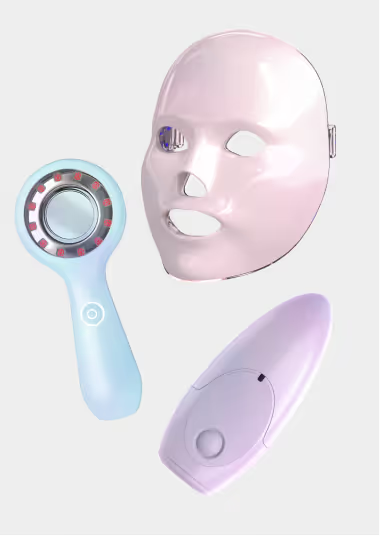
Increasingly, cooling is also being combined with other technologies such as LED, microcurrent, EMS, radiofrequency and vibration. This can make sense when each technology has a defined role, for example when the primary treatment provides the biological stimulus and cooling is used to improve comfort or support the post-treatment phase.
The same principle applies across multi-technology products. More features do not automatically make a better device. Each technology should contribute to the intended outcome.
Safety has to be engineered into the product
A cryo device needs more than a component that becomes cold. It needs a controlled thermal system.
Depending on the application, this may include temperature sensors, treatment timers, automatic shut-off functions, defined minimum temperatures and software that prevents prolonged exposure. Home-use products require particular attention because the device has to help prevent misuse without a professional monitoring every session.
Skin-contact materials, condensation management, applicator geometry and cleaning also need to be considered during development.
These decisions should be made early rather than added once a prototype already exists. Light Tree Technology follows this type of structured process from concept through engineering and validation, as described in From Concept to Product: Inside LTT's Development Process.
What should users realistically expect?
A well-designed cryo facial may leave the skin feeling cooler, calmer and temporarily firmer. Puffiness can decrease, visible redness may be reduced and the face can look more defined immediately after treatment.
Those effects are useful, but they are generally temporary.
A conventional cryo facial should not be expected to permanently lift sagging tissue, remove facial fat, rebuild large amounts of collagen or replace treatments specifically designed for structural skin laxity.
That does not weaken the technology. It simply defines where it performs best.
For many products, the strongest positioning is around cooling, calming, de-puffing, post-treatment comfort and short-term improvement in facial appearance.
What this means for product development
The first question when developing a cryo facial should not be how cold the device can become.
It should be what skin response the product is intended to create.
A de-puffing device requires a different treatment strategy from a post-procedure cooling system. A combination hot-and-cold facial tool may require a completely different temperature profile again.
Once the intended outcome is clear, the engineering team can define the target temperature, treatment duration, cooling method, applicator geometry, sensor system and safety limits around it.
The same applies to claims. A product should be developed around evidence that supports the intended commercial positioning, rather than developing the hardware first and deciding what to claim afterwards.
Conclusion
Cryo facials can create genuine short-term effects in the skin. Controlled cooling influences superficial blood flow, swelling and sensory activity, which can reduce puffiness, calm discomfort and temporarily make the face appear firmer.
The evidence for permanent skin tightening is far less convincing.
For brands, that makes precision more important than extreme cold. The strongest cryo devices are designed around controlled temperature, consistent exposure, comfort and a clearly defined cosmetic or recovery application.
At Light Tree Technology, we develop advanced heating and cooling products for beauty, wellness and medical applications. From early research and industrial design to engineering, prototyping, regulatory preparation and scalable manufacturing, we help brands translate thermal technology into market-ready products.
Looking to develop a cryo facial or hot-and-cold beauty device?
Build the temperature profile, treatment protocol and product experience around the intended skin response from the beginning.
Start your project with Light Tree Technology.
Your next steps start here
Want to see how our expertise can support your business? Leave your details and our team will contact you shortly.